Richard Jenkins on Simplicity, Collaboration, and the Art of Playing Detective Homer
Emmy-nominated actor Richard Jenkins recently sat down with Jenelle Riley to discuss his compelling performance as Detective Homer in HBO's “DTF St. Louis”, a project that demonstrates his mastery of subtle character development and collaborative artistry.

Image courtesy of Warner Brothers Discovery.
Jenkins' approach to Detective Homer reveals a sophisticated understanding of character complexity. The actor discovered that Homer embodies a fundamental contradiction. He’s a man who appears to have everything figured out, yet contains surprising depths of empathy. In one pivotal early scene, Homer observes that his companion shouldn't have to "get up so early in the morning just to be you," noting it "should be an all-day kind of thing." Immediately this informed Jenkins of who the character was. He explains, "Just in passing, he says that in that moment. And it's like, wait a minute now. This guy is interesting. He's really interesting."
This small moment encapsulates Jenkins' philosophy: the most powerful character work often emerges not from overwrought choices, but from allowing the script's inherent humanity to shine through. Homer may appear cranky and stubborn on the surface, but "already, there's a humanity to it," Jenkins observes.
The Power of Instinct
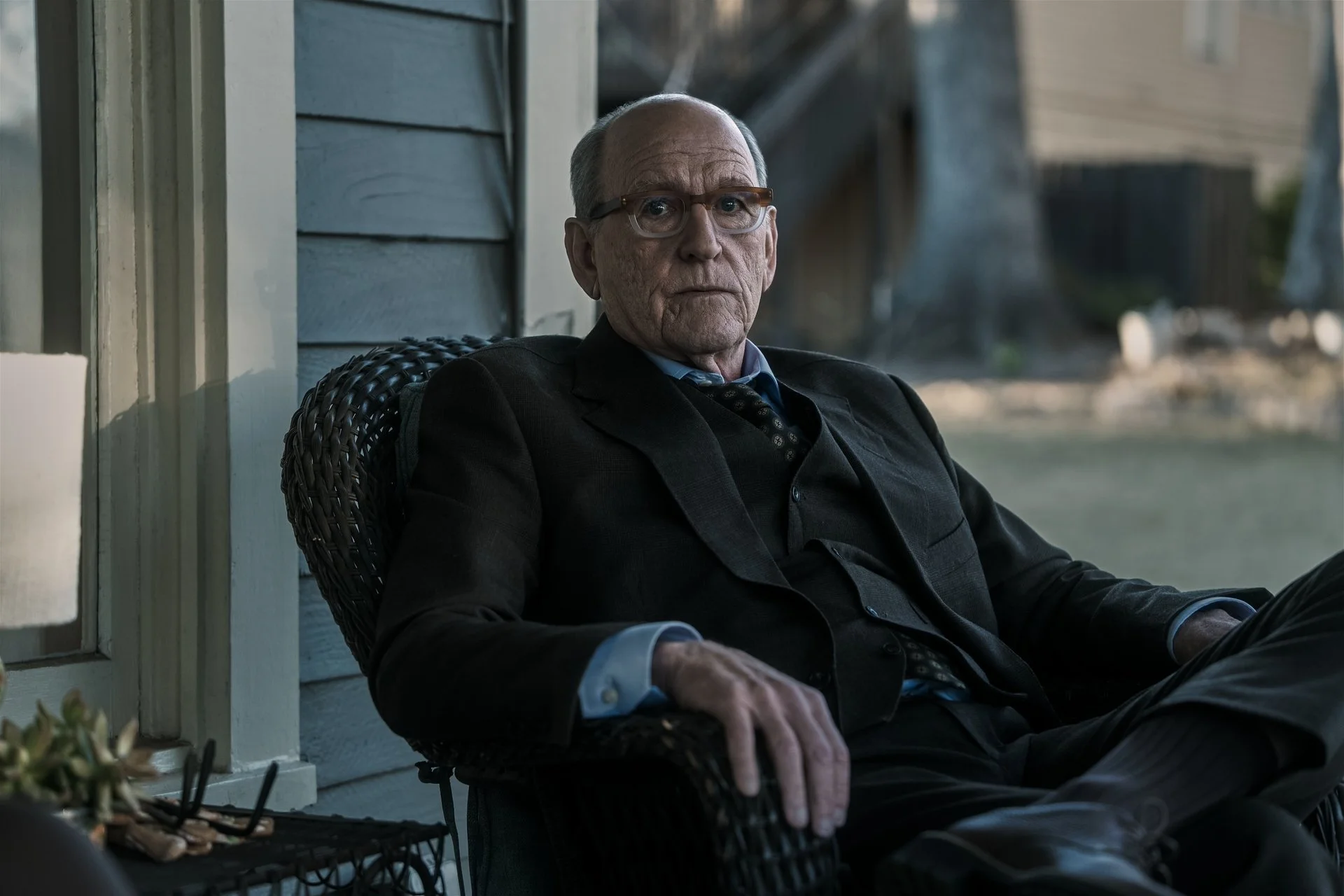
Image courtesy of Warner Brothers Discovery.
When discussing the iconic glasses that Detective Homer wears throughout the series, Jenkins reveals an approach that prioritizes instinct over deliberation. The glasses are simply his own, offered casually to director Steve Conrad, who immediately approved. "That's when it's usually the best. Yeah. When you don't stew over something, when you don't try to figure something out." This philosophy extends to all aspects of his performance. Jenkins emphasizes the dangers of overthinking character choices, instead advocating for trust in one's instincts. "Your instinct is your weapon," he states. "And instincts are usually pretty reliable things."
The actor credits director Steve Conrad with establishing a set environment that encouraged authentic performances across the entire ensemble. Conrad's approach of watching what actors bring rather than dictating specific choices resulted in safety and freedom. "He was collaborative, he was open, he was watching everything," Jenkins notes. "You felt safe. You felt like you can't really make a mistake; you do it again if you do."
This directorial trust proved essential for the ensemble, which includes powerhouse performers like Jason Bateman, Linda Cardellini, David Harbour, and Joy Sunday. Jenkins expresses genuine admiration for his cast-mates, describing Harbour's performance as "genius" and noting that Sunday is "really gifted."
Honoring the Script's Tonal Complexity
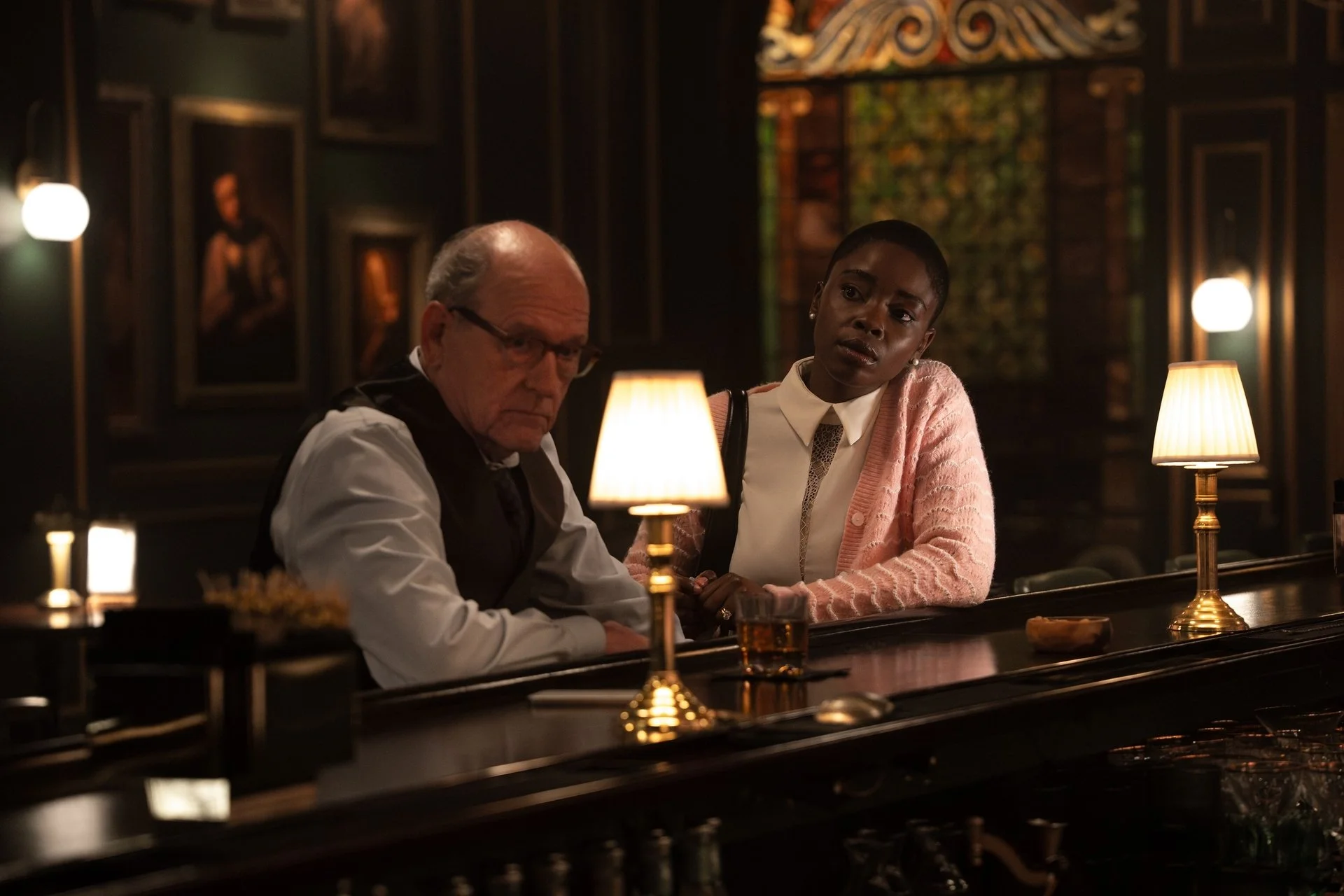
Image courtesy of Warner Brothers Discovery.
One of the performance's most delicate challenges involved playing opposite characters who are simultaneously maddening and sympathetic. Jenkins acknowledges the difficulty of portraying someone genuinely good. David Harbour's character literally saves three lives. "He's maddening, and he's heartbreaking, and he's selfless. He's a person. He's got a lot of contradictions in him," notes Jenkins.
This nuance prevents Homer from becoming a mere supporting player with a simple function. Instead, he becomes a fully realized character who evolves throughout the narrative, giving the audience time to truly know him. A rarity in supporting roles.
When asked about the show's difficult tonal balance between thriller, dark comedy, and tragedy, Jenkins explains that he deliberately avoided "making jokes" of the comedic moments. His strategy was to play the character's genuine confusion and concern, allowing the humor to emerge organically from the situation rather than through comedic performance. "I didn't think about it as being funny or not funny. So therefore, I thought, well, maybe I missed it, but I think that's usually the way to go anyway."
The closest thing Jenkins allowed to ad-libbing was writing "AP" in Homer's notebook when the character hears "ass play," which emerged only because he believed it served the character's authentic confusion and methodology.
The Eternal Uncertainty of Acting
Throughout the conversation, Jenkins emphasizes an uncomfortable truth about his craft: genuine uncertainty about whether choices will work. He contrasts film and television with theater, where immediate audience feedback provides clarity. In scripted media, actors must proceed on faith alone. "You're never sure," he admits. "You know, you're sure in the theater pretty quickly... We don't in movies and TV, so you're never sure."
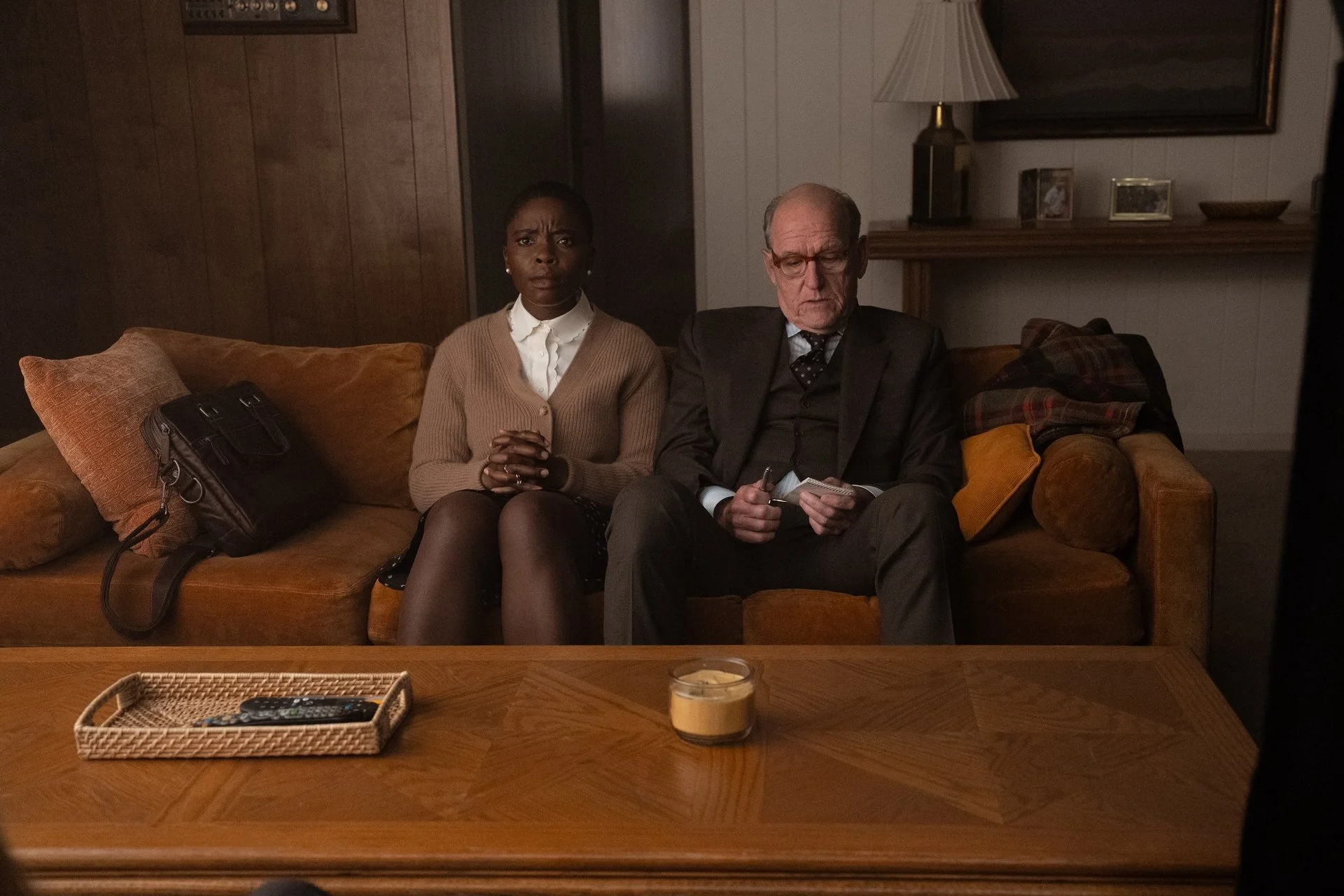
Image courtesy of Warner Brothers Discovery.
Yet this uncertainty doesn't paralyze him. Instead, it reinforces his commitment to trusting instinct and avoiding the impulse to control every element of a performance. The most dangerous impulse in acting, Jenkins suggests, is the very human desire to manage and control.
For his fourth Emmy nomination, Jenkins expresses genuine surprise, yet his pleasure clearly stems from peer recognition rather than accolades themselves. His generous praise for fellow cast members, particularly Harbour, who is aa competitor in the same category, demonstrates that for Jenkins, the joy of acting lies primarily in the collaborative creation of truthful performances.
Richard Jenkins' approach to DTF St. Louis ultimately illustrates a philosophy refined over decades: the most powerful character work emerges not from calculation or technique, but from the courage to trust one's instincts, honor the script's complexity, and remain genuinely open to where authentic performance will lead.
Image courtesy of Warner Brothers Discovery.