The Betrayal of Cora Wexford – a Historical Fiction Novel That We Need Now
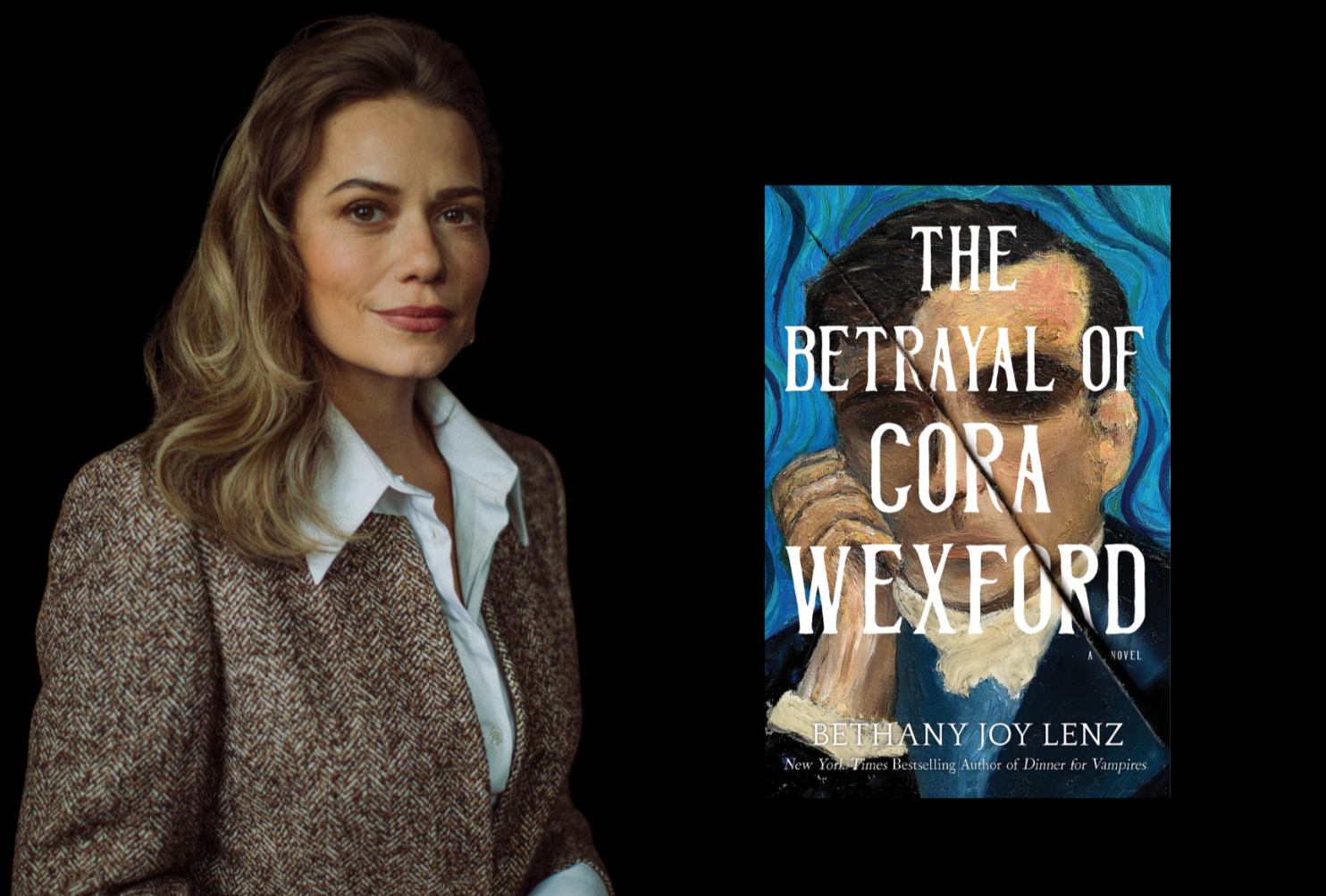
Portrait photo credit: Mandii Erwin
By Cat Wenz
I had the opportunity to chat with Bethany Joy Lenz about her new historical fiction novel, The Betrayal of Cora Wexford. The novel is set in 1888 London and follows Cora Wexford, an American woman who moves to London to escape tragedies in her past. In London, Cora paints the recently dead for wealthy families. As a single woman, Cora struggles against the social norms and legal limitations that society placed upon women. What struck me about the novel was the reality that while many of the legal restrictions have changed, (the right for women to vote and own property and credit cards, etc.) many of the ingrained social norms that restrict and harm women remain. Certainly, women can live more independent lives today than in 1888, but they are made vulnerable and face dangers from men because society still values the life of a man above the life of a woman. Shedding light on this was very intentional for Lenz.
When she first considered 1888 as the period for her characters, she had not initially realized it was the same time as the Whitechapel (Jack the Ripper) murders. After that discovery she realized it created the perfect backdrop for the story she wanted to tell. Specifically, she observed that, “everyone pays attention to physical violence and nobody pays attention to psychological violence. It gets ignored…while it is undoubtedly, invariably, the precursor to physical violence in any relationship.” Through Cora’s journey she planned to demonstrate and contrast these two very real dangers that face women. In that period, physical violence was sensationalized, as demonstrated by the Whitechapel and similar murders. Lenz describes the psychological danger as the silent dismembering of a woman through actions which slowly reduce a woman’s life, hopes, dreams, joys, and the very essence of who she is until she is a shell of her former self. This dismembering is facilitated by societal structures that force women into the background and encourage them to be silent about their thoughts, beliefs, desires and observations. This environment makes it very easy for predators and manipulators to undermine and discredit a woman.
Beyond highlighting the treatment of women and the ignored psychological danger, Lenz wanted readers who have been in abusive relationships to feel seen and to recognize the behavior and patterns, because these patterns continue to exist today. The story adeptly accomplishes these goals.
In the novel, Cora paints the recently deceased for wealthy Victorian families. As she reads the news and listens to society’s chatter regarding violent acts committed against women, she recognizes that spectators sensationalize the violent acts but never truly care about the women who are victims. Frequently, they are described as prostitutes or women of low morals, without regard to the truth. This false narrative perpetuates the myth that if you are a good person, you will be shielded from such horrors. What we further realize through Cora’s eyes, is that women are treated as accessories to the lives of men, lacking in independent value. While physically abusing or even murdering a female family member was frowned upon, the punishment would not have been so severe that it would have ruined the life of the man. The lives of the women who were eliminated are barely considered. Lenz shared how often the newspaper articles of that time did not even mention the women’s names let alone whether they had families or children.
Against this backdrop, Cora is given a commission to paint some of these women who have been brutally murdered. This includes victims of the Whitechapel murderer and others attacked in their communities, including by their own family members. Cora uses that opportunity to push back against the dismissive treatment of women and paint them as humans worthy of dignity and respect. She paints many of them in wealthy comfortable settings where they would not have likely been found. Her elevation of the women in the paintings illustrates that they were once real living women, deserving of love and the chance to live a full life. Lenz details the care she took to determine each portrait and added that such depictions would not have been universally accepted in that period. She referenced the woman attacked by a group of men that Cora painted as a Saint, which would have been considered inflammatory at the time.
Cora has made friends in London and through the arc of the story meets two men, one who is known in the art world and one who is a friend of a friend that she begins a relationship with. She has established herself as a competent artist, travels in wealthy circles above her standing and believes she is valued and accepted in her surroundings. We see Cora make observations of people and situations that are at odds with what her community sees, and we also see her talk herself out of those observations. Lenz offered that she shares a lot of traits with Cora and wants to remind readers to trust their instincts. She notes that intelligent people get fooled all the time, and it can occur because we do not want to be rude or assume the worst when everyone else believes someone to be amazing. As she observes, “it’s kind of exhausting to be the sore thumb.” So, instead we push our instincts aside to go along with the group narrative.
When Cora finally confirms that all is not as it originally seemed and begins to question the actions of a certain character, she finds she is easily dismissed, even when she provides proof. And of course, the conflicting information and explanations provided by the man are immediately accepted. Interestingly, despite how clearly Cora sees the treatment of other women, she is surprised by how easily she is dismissed. Lenz concedes that this was her own “personality leaking out.” Despite having experienced narcissistic and coercive behavior, she still wants to be open and trusting of others. These characteristics in Cora make her so relatable. It is so much easier to see the truth about how someone else is treated, than to see it in our own circumstances. Lenz wants readers to have compassion for themselves in moments where this occurs for it is universal for those with trusting natures.
Fortunately, Cora has a few mentors along the way that help her frame and understand her situation. As a woman, this piece resonated strongly. The penultimate chapter is a scene with Cora and Ruth which contains a monologue from Ruth of the realities of life as a woman in that world in 1888. It is both heartbreaking and uplifting. This is where Lenz really connects 1888 with what women face today. As a woman, you can’t help but see that the truth described has not really changed. While women are able, now, to have independent lives, you see how deeply those social norms were carved and how even with some softening they are still visible. A man’s life and future potential are sacrosanct and his word is taken at face value while the statements of a woman are more often discredited as being emotional or overly dramatic. Women are not valued equally. This landscape creates an environment where manipulators and abusers can more easily do to harm women. Ruth does not sugarcoat that reality to Cora, “There is no justice in this world, and only you can decide what to do with that.” That sentiment directs the ending. Lenz admitted that she was not sure how the novel would end when she began it, but that she wanted it to be true to the human experience. It is.
What is clear to me is that men have no incentive to alter a structure that provides them an advantage. Change will have to come from women, from both demanding that our value be recognized and supporting each other as we stand. The latter is critical for women as we exist in our current circumstance and as we navigate the road ahead. I applaud Bethany Joy Lenz for painting us this poignant story that illustrates these points.
I may just keep a copy of the book near my bedside so that when I, as a woman, inevitably face attempts at my dismemberment, I can read the last two chapters and decide for myself what path forward I will take.