Building the Beast: The Artists Who Brought Stranger Things Season 5 to Life
The VFX and makeup effects team behind Netflix's landmark final season on the impossible task of closing out one of television's most beloved worlds.
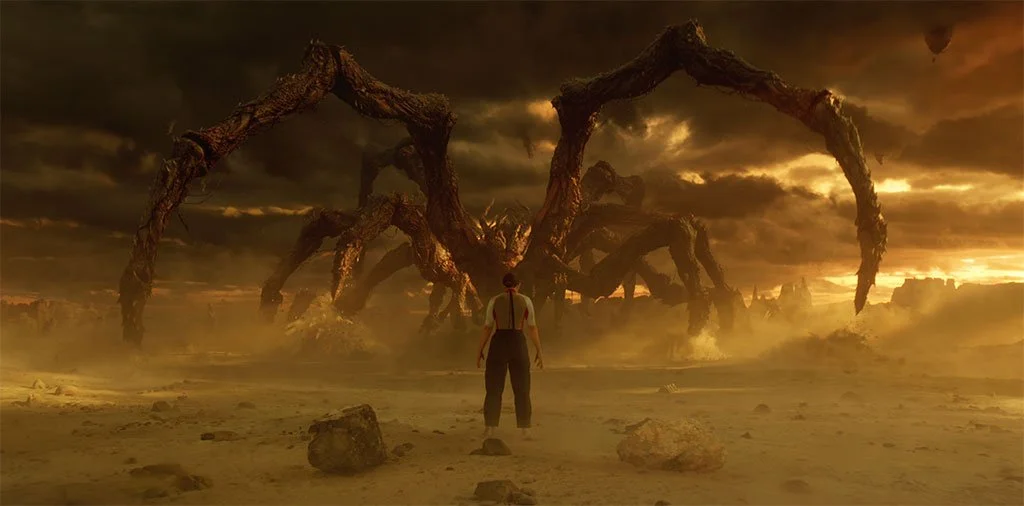
Image courtesy of Netflix.
When Netflix's Stranger Things returned for its fifth and final season, the pressure on every department was immense, and perhaps nowhere more acutely felt than in the teams responsible for making the Upside Down look, sound, and feel like somewhere genuinely terrifying. In our recent panel moderated by Jenelle Riley, Special Makeup Effects Department Head Barrie Gower, VFX Supervisor Betsy Paterson, and VFX Art Director Michael Maher Jr. pulled back the curtain on how the season was built.
Vecna 2.0: Bigger, Stranger, Less Human
The evolution of Vecna across seasons is, in many ways, the story of the show's own ambitions. For Season 4, Maher worked through more than 50 design iterations before the Duffer Brothers settled on a look drawing heavily from horror touchstones like Hellraiser and A Nightmare on Elm Street , and weaving in the Upside Down's signature vine imagery to suggest a man whose humanity had been consumed entirely.
For Season 5, the directive was blunter: Vecna on steroids. He needed to be larger, less humanoid, and more of a genuine monster. The balance between what could be achieved practically on set and what would require digital augmentation shifted significantly. Gower's team built elaborate prosthetics designed to preserve actor Jamie Campbell Bower's performance while leaving room for Paterson's VFX team to extend and animate the character beyond what any physical makeup could achieve. Animators effectively added punctuation to Campbell Bower's performance, such as allowing the tendrils draped across Vecna's body to subtly respond to key words and emotional beats, ramping in intensity during the character's most charged moments.
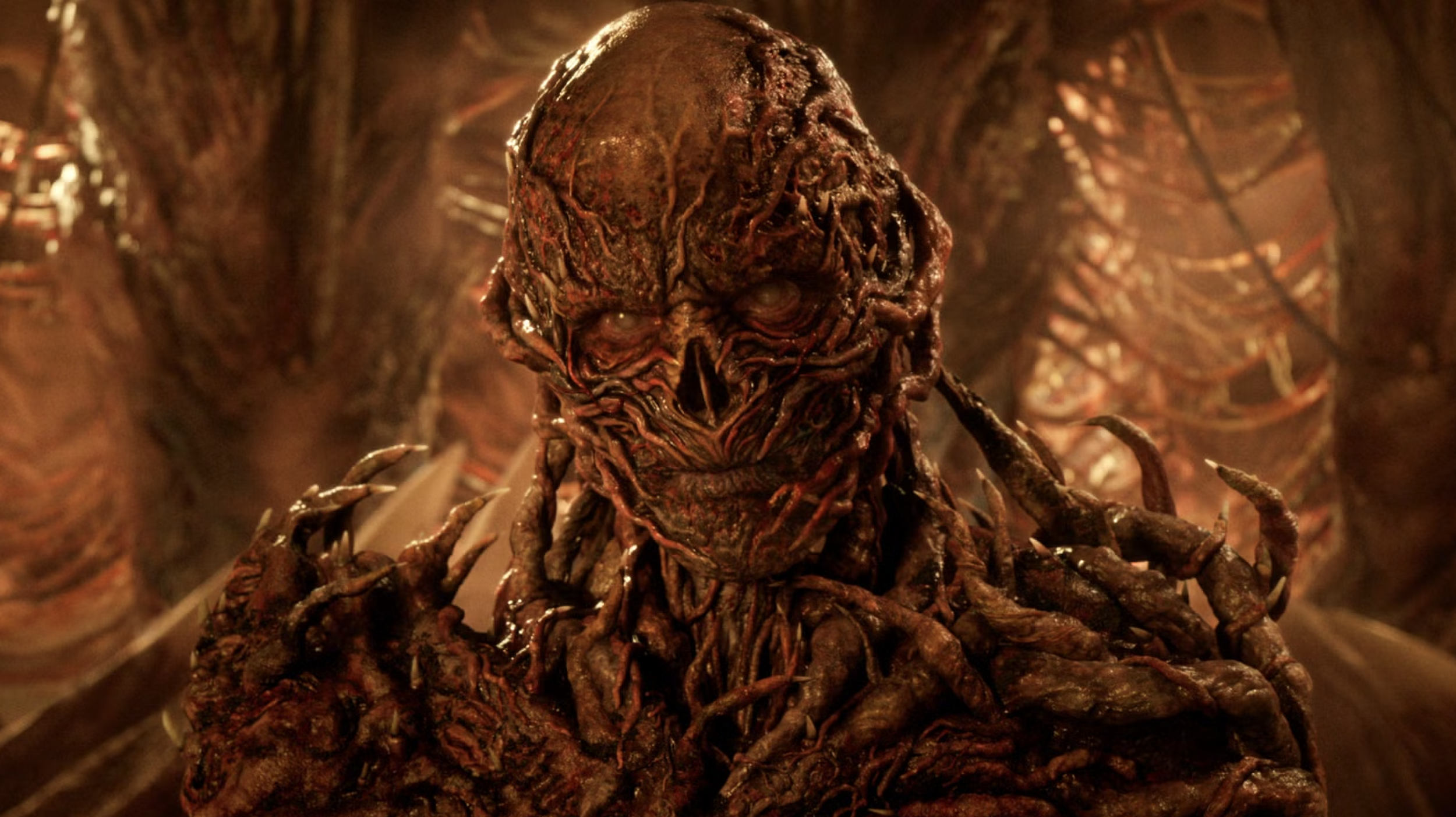
Image courtesy of Netflix.
The collaboration between departments was constant and non-negotiable. "The best effects in TV and film are a really nice collaboration," Gower said. A philosophy reinforced by the fact that his own wife, a former Framestore visual effects artist, helps run their company and serves as a direct bridge between the practical and digital worlds.
Campbell Bower himself proved an invaluable partner throughout. Despite the physical demands of the prosthetics and stunt work, which included wire rigs and harness systems, the actor insisted on performing as much as possible himself. "He's one of the most game actors I've ever worked with," Paterson said. "He's not one to say, this is going to be CG anyway."
The Battle Sequence That Took a Year to Shoot
Among the season's most audacious set pieces was the sprawling MAC-Z battle sequence, conceived as a single continuous shot involving close to 100 actors, fight choreography, and the digital insertion of Demogorgons. Planning began approximately a year before filming, with Maher developing storyboards and pre-visualization that had to account for every camera movement, every stunt beat, and the precise placement of creatures that wouldn't physically exist on set.
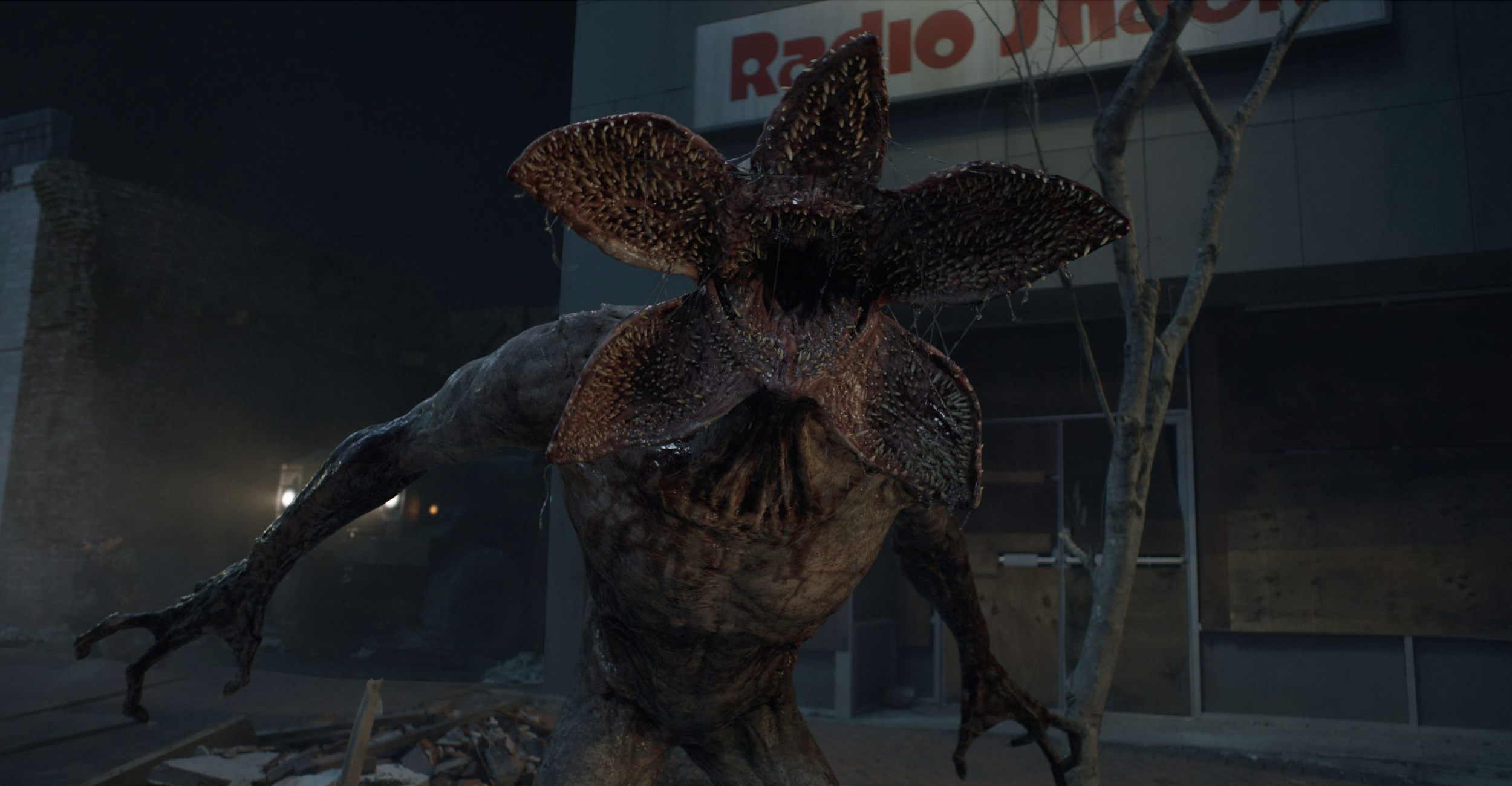
Image courtesy of Netflix.
"It had to all be very choreographed and timed out," Maher explained, describing how stunt performers stood in for digital creatures to allow the camera to rack focus correctly. The actual shoot took five weeks across two shifts running continuously, followed by two months of rehearsal prior to that, and a year and a half of post-production work after. The final touches were delivered just before the episode aired.
The Subtler Challenges
Not every difficult moment announced itself with scale. Among the most technically demanding tasks of the season, Paterson cited the digital de-aging of Noah Schnapp to recreate Will Byers as a child. Since Schnapp is now a grown man, traditional de-aging techniques were insufficient. Instead, the team replaced his head on a real child performer, reconstructing his younger appearance using archival footage and even childhood family photographs. The goal was seamless enough that audiences might believe the footage had simply been filmed during Season 1 and never used.
The Mind Flayer's interior set presented a different kind of collaborative achievement with a physically built environment sculpted by hand by the art department, refined digitally by VFX vendor Weta, and brought to life through a choreography of lighting, performance, and effects that Maher described as "the show's powers in one set."
Invisible Work, Lasting Impact
What connects every element of the team's work is the same paradox that defines great visual effects and makeup artistry: the better the job, the less anyone notices. A year and a half of labor on a single battle sequence. Family photos sourced to reconstruct a child's face. Tendrils animated word by word. All of it in service of a story and designed, ultimately, to disappear into it.
All episodes of Stranger Things Season 5 are now streaming on Netflix.